How Hag Dyke Works
Because of the remote location, Hag Dyke has no access to the essential services we all take for granted. We have had to find some ingenious, and sustainable, solutions to keep the facilities running.
Water
Water comes from a spring on the moor, about 50 meters above the hostel. This is filtered and then piped to a 2,800 litre underground storage take. From there it comes into the building to the water treatment plan in the extension behind the kitchen. This room is heavily insulated and heated in winter to prevent freezing. Here the water is further filtered and treated to remove minerals, the natural brown colouring from the peat moor, and to correct the pH.
It then goes to the Ultra Violet steriliser in the kitchen. Now meeting environmental health standards, the water is used throughout the building.
Waste Water
Waste water goes to a 3,500 litre septic tank that is underground on the moor side of the building. The liquid run off from the tank is filtered naturally and the solids removed when the tank is emptied each year. We do not use any bleach or strong disinfectants which would prevent this process working properly.
Electricity
Hag Dyke was originally lit by candles or paraffin lamps. Later we progressed to gas lighting, but now we rely on electricity. Without electricity we would have no lighting, no water, no heating, no hot water and no refrigerator.
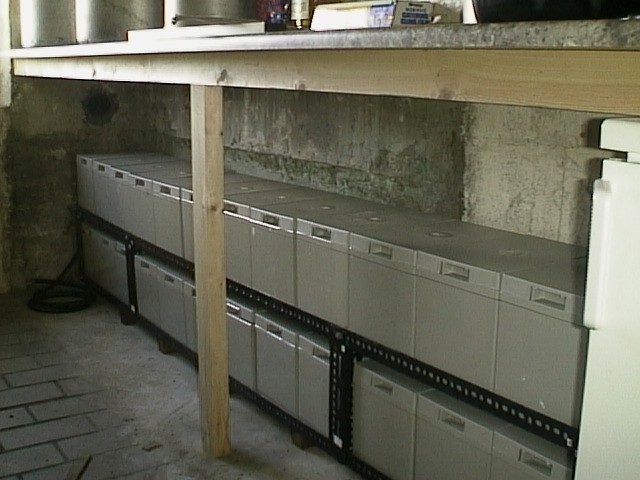
We generate all our own electricity. On the south east facing roof are eighteen solar panels. On a bright summers day these can produce up to 5kW which charges four banks of 48 volt batteries, which are housed in the pantry and the old generator room.
The batteries are the most expensive part of the system (around £20,000 at today’s prices) and we must look after them carefully. This means not overcharging them, and not letting them run too low. The equipment which controls all this is housed in the pantry and the drying room.
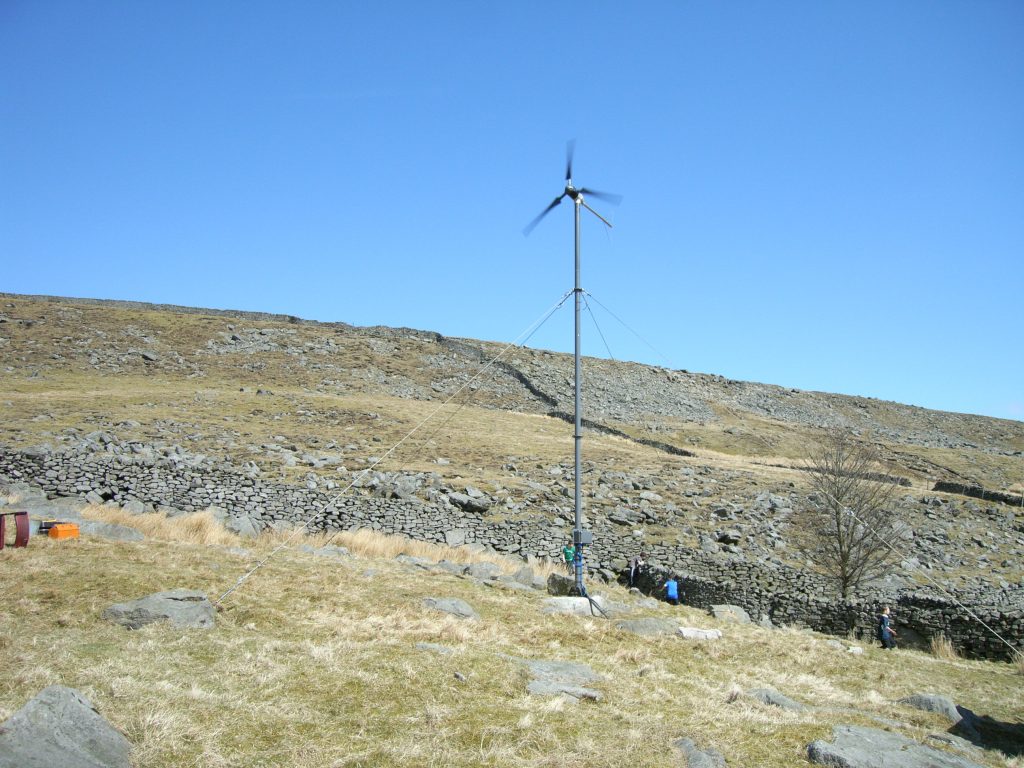
We also have a 1kW wind turbine in the field behind the chapel. This provides additional power in winter but it requires much more maintenance than solar panels.
For those gloomy winter days when there is no sun and no wind we have an 11kVA diesel generator that is located in its own purpose built shed behind the hostel. This is seldom required, and runs for less than 100 hours each year. The generator can be started from inside the building, and it will start automatically if there is a danger of the batteries running too low, and it can also be used when we are working with power tools or large equipment.
When there is more wind and solar power than we are able to use we send the surplus to heat the hot water and reduce our consumption of gas.
There is also a smaller wind turbine and solar panel on the roof of the main building which charges a separate set of batteries with power the night lights, fire alarm and internet router.
ALl the lights around the hostel are low energy LEDs and run directly from the 48 volt supply. We use 2 inverters to provide 230 volt AC for all the mains powered equipment.
Fuel supplies
Coal is kept in the barn for the dining room stove and the lounge fire. Gas for cooking and for the central heating boiler is piped underground from an outdoor storage area. There are 4 x 47kg propane cylinders in use at any one time. Coal and gas have to be transported from Kettlewell by tractor, and is by far our largest running expense.
We are constantly looking for ways to improve the systems and further reduce our dependence on fossil fuels.